
If you are wondering what to buy at a dispensary for beginners, most new shoppers in Massachusetts start with one of four things: a low-milligram edible, a single pre-roll, a small eighth of flower, or a CBD-forward item. Those four cover the common entry points, and all of them are sold by the unit, so you are not committing to a big purchase on your first visit.
The freeze at the counter is normal. A Massachusetts adult-use menu can run hundreds of individual items across ten or more categories, from flower and vapes to drinks, tinctures, topicals and concentrates, and the labels are dense with numbers. Adults 21 and over with a valid government-issued ID can shop any of those categories in person or order online and pick the order up, and budtenders are there to narrow it down by effect, cannabinoid content or terpene profile before you ever pull out a card.
Table of Contents
How Dispensary Menus Label Strength
Two numbers do most of the work on a Massachusetts menu. Anything you smoke or vape is measured as a THC percentage by weight, and anything you eat or drink is measured in milligrams.
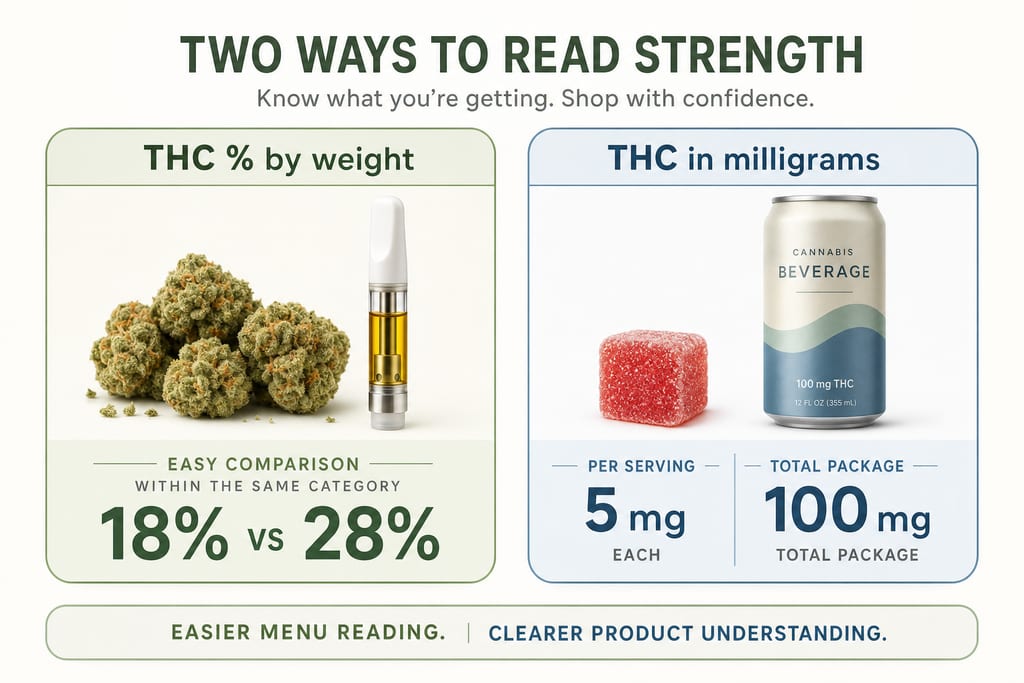
A percentage tells you how much of the material is THC, so flower at 18% and flower at 28% are the same product category with different test results. Milligrams count the THC in one gummy, chew or can, plus the total in the sealed package.
| Product type | How strength is listed | Looks like |
|---|---|---|
| Flower, pre-rolls | THC percentage by weight | 21.4% THC |
| Concentrates, vape carts | THC percentage by weight | 74% THC |
| Edibles, drinks | Milligrams per piece and per package | 5 mg each, 100 mg total |
| Tinctures | Milligrams per bottle | 100 mg per 30 mL |
| CBD-forward, balanced | Ratio, CBD to THC | 20:1 or 1:1 |
Those figures come from lab testing and are printed on every compliant package, along with the batch and test date. A bigger number is just a measurement, not a quality score, and plenty of longtime shoppers pick by smell, freshness or terpene profile instead. A budtender can read the label with you line by line.
Edibles and Drinks for a Slow Start
Packaged edibles are the most requested first purchase because the math is done before you open the bag. Each piece is portioned at the factory and tested, so what the label says is what sits in your hand.
Gummies, chocolates, chews and seltzer-style cans all fall under this heading on a Massachusetts menu. Single-serving packs and pieces that are clearly scored or wrapped apart are easier to keep track of than a solid bar you have to break yourself.
The one thing new shoppers misjudge is timing. Anything you eat or drink takes longer to come on than anything you inhale, and that lag is why people reach for a second piece too soon.
| Format | Label unit | Package style |
|---|---|---|
| Gummies | mg per piece | Resealable multi-pack |
| Chocolates | mg per square | Scored bar or box |
| Chews | mg per piece | Individually wrapped |
| Seltzers | mg per can | Single can or four-pack |
Beverages tend to come in low-milligram cans that fit a social night without much planning. Ask a budtender which brands print milligrams per piece versus per package, since the two numbers look alike on a shelf tag.
Flower and Pre-Rolls Without Overdoing It
A single pre-roll is the smallest way to try flower. It needs no grinder, papers or anything else from the accessory case.
Buying smaller weights also lets you sample a strain before paying for a full jar you may not like. THC percentage on a Massachusetts shelf runs a wide range.
Strain names carry less information than most people assume. The terpene profile on the lab panel tells you more about aroma and character, and staff can read that panel off the package with you.
- Single pre-roll: lowest cost, nothing extra to buy
- Smaller flower weight: try a strain before a jar
- Eighth of flower: better price per gram, more commitment
- Infused pre-roll: much stronger, not the starter version
- Airtight storage jar: keeps flower from drying out
Smell notes and effect descriptions are not promises. Two people can smoke the same strain and describe it differently, so treat the shelf copy as a starting point.
Vapes and Concentrates Explained Simply
A disposable pen is the simplest thing on the vape shelf, because it arrives charged and there is no battery to match. You use it, then dispose of it properly.
A 510 cartridge screws onto a separate battery you buy once. That costs more up front and less over time, since you only replace the cart.
Concentrates sit at the other end. Live resin, rosin and badder test far higher by percentage than flower, and they usually need a rig or a specific device, which puts them with experienced shoppers.
- Disposable pen: all-in-one, no battery purchase
- 510 cartridge: needs a battery, cheaper to replace
- Distillate cart: thinner flavor, higher THC percentage
- Live resin cart: more terpenes, fuller taste
- Dab concentrate: strongest by percentage, extra gear required
Cartridges list both a THC percentage and a total weight in grams, so a 0.5g and a 1g cart at the same percentage are not the same purchase. Ask about battery voltage and charging at the counter, and use the menu filters for cannabinoid content or terpene profile to narrow things down before you arrive.
CBD, Topicals and Low-THC Options
Not everything behind the counter is built around THC. CBD-forward products sit on the same shelves as adult-use THC items in Newton and Natick, and they are labeled with both cannabinoids when a product contains both.
Balanced gummies and tinctures print a ratio, so you can see the CBD side and the THC side before you buy. Tinctures come with a marked dropper and list total milligrams per bottle.
| Format | How it is used | Label unit |
|---|---|---|
| Balanced gummy | Eaten | Ratio plus mg per piece |
| Tincture | Marked dropper | mg per bottle |
| Balm or lotion | Applied to skin | mg per container |
Topicals are their own category, applied to the skin rather than eaten or inhaled, and the packaging describes them that way. That is format and labeling information only, with no claim attached about what any of it does.
Medical questions belong with your own healthcare provider, and program specifics are set by the Massachusetts Cannabis Control Commission. Either way, these are adult-use purchases that require a valid government-issued ID showing you are 21 or older.
Sort by Potency or Sort by Profile
Most deal hunters open a Massachusetts menu and sort it one of two ways, price per gram low to high or THC high to low. Both are honest numbers, and both point a first-time buyer at the wrong shelf.
Two items that test at the same percentage can read very differently once format and terpene content come into it, which is why a beginner guide to strains spends more time on profile than on potency. A lab panel describes the sample that went to the lab, and no package promises an outcome.
| Way to sort | Who it suits | What it costs you |
|---|---|---|
| Lowest price per gram | Restocking a known favorite | A big jar of something untried |
| Highest THC percentage | Experienced shoppers | Too strong for a first buy |
| Effect or terpene profile | First-time buyers | A few more minutes asking |
| Daily offers page | Budget shoppers | Narrower list of items |
Filtering by effect, cannabinoid content or terpene profile is slower than tapping a column header, and it cuts a few hundred items down faster. Item reviews left by other local shoppers are worth a scan before you drive over, and the day’s offers usually beat chasing the biggest number on the menu.
Pick One Format and Ask at the Counter
Pick one category for this trip, not three. One pre-roll or one pack of gummies is a real purchase you can learn something from, while a cart, an eighth and a tincture in the same bag just blur together. Bring a valid government-issued ID showing you are 21 or older. Order ahead online for pickup, or walk in with no reservation at Redi Newton, 24 Elliot St, or Redi Natick, 321 Speen St, and say it is your first buy so the budtender reads the label with you before you pay. Sort out your ride home first, because nobody should be driving after use.
First Dispensary Trip Questions
How do I pay at a Massachusetts dispensary, and can I use a credit card?
Cash is the safest thing to bring. Cannabis is not legal at the federal level, so the big card networks treat dispensaries differently than other retailers, and accepted payment methods differ from store to store. A quick call to Redi Newton at (617) 916-0148 or Redi Natick at (774) 231-8393 settles it before you drive over.
Is there a limit on how much I can buy in one day?
Yes. The Massachusetts Cannabis Control Commission sets the adult-use cap, currently one ounce of flower per transaction, with no more than five grams of that as concentrate. Ask the budtender how edibles, drinks and tinctures count toward that total while they are ringing you up.
How should I store what I buy once I get it home?
Leave it in the packaging it came in. That container is child resistant, and it keeps the printed label attached to the product instead of loose in a drawer. Pick a cool, dark, dry spot away from the stove and off a sunny windowsill. Store edibles somewhere separate from everyday snacks, and keep all of it out of reach of kids and pets.
Can I legally carry my purchase in the car on the drive home?
Yes, as long as it stays closed. Massachusetts treats an open cannabis container in the passenger area of a vehicle much like open alcohol, so sealed product belongs in the trunk or a locked glove box for the ride back from Newton or Natick. Do not open anything in the car, and do not drive after use. State law sets the penalties.